
Loading...
Serving San Tan Valley, AZ and surrounding areas. (480) 919-2240
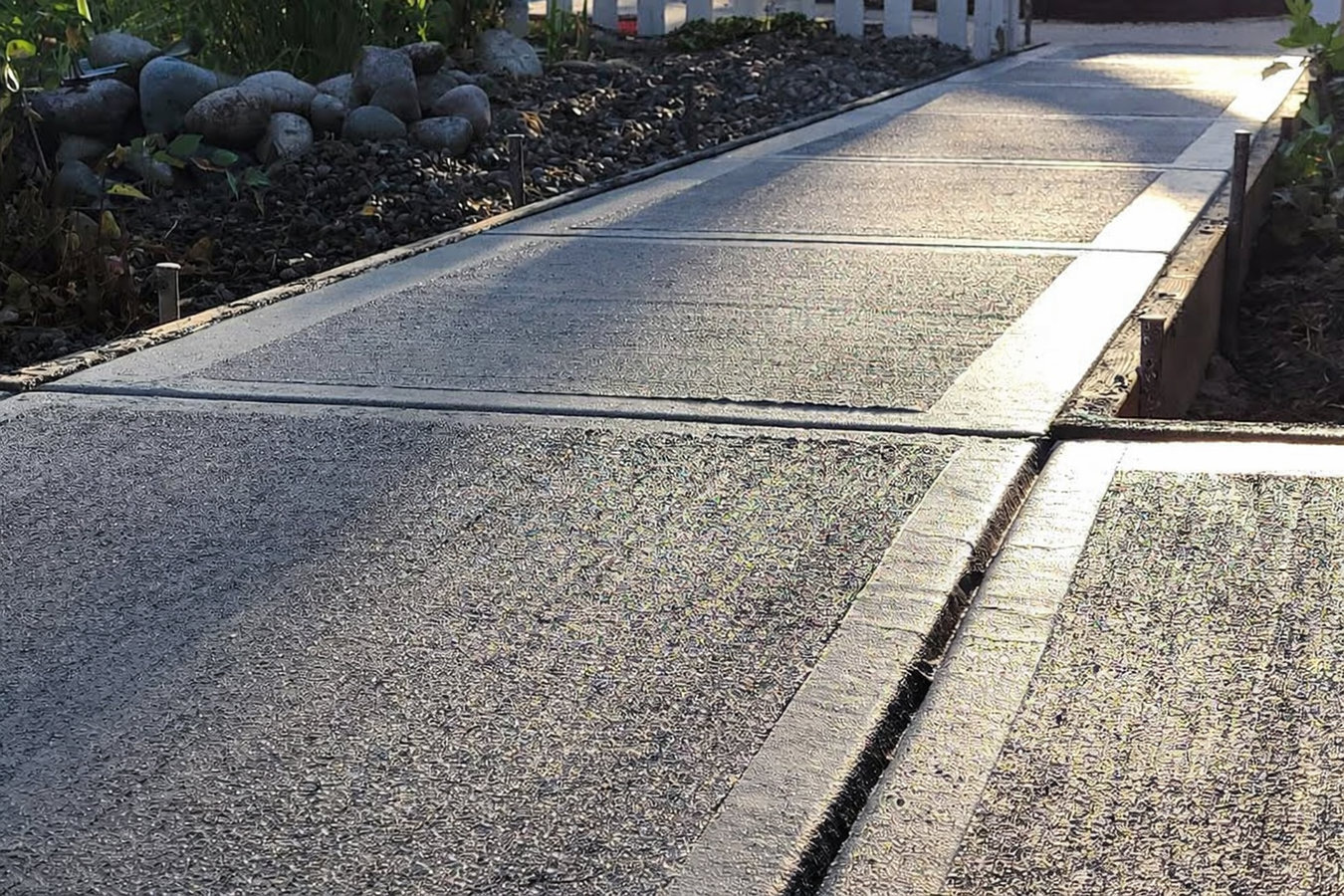
Worn paths, cracked walkways, or bare ground between your driveway and front door? We build concrete sidewalks in San Tan Valley that hold up to clay soil, monsoon rain, and 110-degree summers - and we handle permits for you.
Concrete sidewalk building in San Tan Valley covers removing old material, shaping and compacting the base, forming, pouring, finishing, and cutting control joints - most residential projects are poured in one day, with full curing over 28 days and walkable within 24 to 48 hours. A properly built sidewalk can last 30 to 50 years when the base work is done correctly from the start.
In San Tan Valley, the native soil is a mix of expansive clay and caliche - a hard mineral layer - that makes base preparation more complex than in most parts of the country. Skipping or rushing that step is the most common reason sidewalks crack and shift within a few years. If your existing walkway has reached that point, a fresh pour with a properly prepared base is a better investment than another round of patching. You may also want to look at a full concrete driveway if the driveway surface is in similar shape.
Many homes in San Tan Valley's newer subdivisions were built with little or no concrete hardscape beyond the driveway. If you are adding a walkway to a yard that has never had one, that is actually a simpler job in some ways - no old concrete to remove, though the soil still needs to be assessed and prepared before anything is poured.
Hairline cracks are normal in any concrete, but cracks that are wider than a quarter inch, or where one side sits higher than the other, mean the slab is moving. In San Tan Valley, this is usually clay soil expanding and contracting through wet and dry cycles. It will keep getting worse and will not fix itself.
If water pools on your walkway after a summer storm, the surface has either settled unevenly or was never graded correctly. Standing water softens the base over time and accelerates cracking. In San Tan Valley's monsoon season, a walkway that holds water becomes a hazard and a source of ongoing damage.
If guests and family have been cutting across the grass or gravel between the driveway and front door, that worn path tells you where a sidewalk should go. A concrete walkway in that location is safer, easier to maintain, and stops loose gravel and dust from tracking into the house.
Surface deterioration where the top layer peels away or edges chip off means the original concrete was mixed too thin, finished too quickly, or has simply reached the end of its useful life. Once the surface starts breaking down, it accelerates - small chips become larger chunks and become a tripping hazard.
We build concrete walkways from first contact to finished product - that includes the site visit, written estimate, permit handling with Pinal County if required, base preparation, forming, pour, surface finishing, and control joint cutting. You do not need to manage multiple contractors or chase permits yourself. For larger hardscape projects that include a garage approach or additional outdoor concrete, we also handle garage floor concrete as part of the same project or separately.
Surface finish options include a standard broom finish - the slightly rough texture that provides traction when wet - and smoother trowel finishes for covered or interior-adjacent areas. In San Tan Valley's climate, a broom finish is almost always the smarter choice for any exterior walkway because it grips in morning dew and after monsoon rain. We cut control joints at proper intervals so any expansion and contraction happens in a planned, less visible location rather than randomly across the slab.
Best for connecting the driveway or street to the front door with a safe, clean path.
Best for creating a defined path along the side of the home to the backyard or utility area.
Best for linking the back door, patio, or outbuilding with a durable concrete surface.
Best for homeowners replacing a cracked, uneven, or deteriorated existing walkway.
The soil conditions here create challenges that contractors from outside the East Valley often underestimate. Much of San Tan Valley sits on clay-heavy soil that swells when it rains and shrinks during dry stretches. Beneath that is often a layer of caliche, a naturally cemented mineral crust, that may need to be broken through to create a stable base. A contractor who quotes from the street without assessing your actual soil is likely giving you a number that will change once work begins. The Arizona Department of Transportation documents these soil conditions across the region, and they are a known factor for any concrete work in this area.
We work regularly in San Tan Valley and Queen Creek, including planned communities like Johnson Ranch, San Tan Heights, and Pecan Creek where HOA architectural review committees must approve concrete work before it begins. Getting approval in writing before a shovel touches the ground protects you from violation notices and ensures the finished walkway meets your community's standards. We know the process in these neighborhoods and help you submit the right paperwork the first time.
We reply within one business day. We will ask roughly where the walkway goes, how long it needs to be, and whether there is existing concrete to remove. That is enough to schedule a site visit.
We come to your property, measure, and assess the actual ground conditions - including any caliche or clay issues that could affect the cost. You receive a written quote that covers everything, with no numbers that change later because of ground conditions we already knew about.
If Pinal County requires a permit or your HOA needs architectural review, we handle the paperwork and submission before any work begins. We will give you a realistic timeline for approvals and will not schedule the pour until everything is in hand.
In summer, the crew starts early to manage the heat. We form, pour, finish, and cut control joints the same day. You can walk on the surface within 24 to 48 hours. We do a final walkthrough before we leave and give you specific curing instructions for your situation.
Free written estimate. Permits handled. We reply within one business day.
(480) 919-2240We carry a current Arizona Registrar of Contractors license, verifiable at roc.az.gov. That means we have passed background checks, carry required insurance, and are accountable to a state board if something goes wrong - not just to a review platform.
Most sidewalk projects in San Tan Valley require a Pinal County permit, and we handle that application as part of the job. You should not have to figure out the permit process on your own or deal with the paperwork - we include it in your quote and take care of it before work begins.
We visit your yard and assess the actual ground conditions before giving you a number. If there is caliche that needs to be broken up or soft clay that requires additional base material, you find out in the quote - not as a surprise charge halfway through the job.
We have worked in San Tan Valley's HOA communities and know which ones require architectural review before concrete work begins. We help you submit the right paperwork and get written approval so your finished walkway stays in place and you avoid violation notices.
The combination of local soil knowledge, permit experience, and HOA familiarity is what separates a smooth project from one that stalls or goes over budget. We follow Portland Cement Association best practices for hot-weather concrete placement, which matters more in San Tan Valley than anywhere with a milder climate.
Replace or upgrade your garage floor with a properly prepared concrete slab that handles vehicle traffic and Arizona temperature swings.
Learn moreIf your driveway surface is as worn as your walkway, a new concrete driveway completes the front of your property at the same time.
Learn moreFall booking slots fill fast - lock in your preferred start date before the best weather window closes.