Loading...
Serving San Tan Valley, AZ and surrounding areas. (480) 919-2240
Every patio cover, block wall, and room addition starts underground. Get concrete footings installed right - deep enough, reinforced correctly, and built for the clay soils here.
Concrete footings in San Tan Valley are the underground bases that hold up structures like patio covers, block walls, room additions, and pergolas - most residential projects take one to two days of active work, with Pinal County permits and curing adding one to four weeks to the total timeline.
Think of a footing as the feet of whatever structure sits above it. Without a properly sized and placed footing, the structure above will shift, crack, or lean over time. In San Tan Valley, this risk is higher than in many places because the soil here contains clay that swells when it absorbs water during monsoon season and shrinks back during the dry months. That repeated movement puts real stress on anything built on top of it. A footing sized right for these local soil conditions is the difference between a patio cover that stays level for 20 years and one that starts pulling away from the house in three.
Most footing projects also require a Pinal County building permit, which means a county inspector verifies the work before the concrete is buried - protecting you from problems you would never be able to see otherwise. If your project involves a larger structure, you may also need foundation raising services or a full foundation installation.
If you are building a patio cover, pergola, block wall, room addition, or detached garage, you almost certainly need concrete footings before any of that work begins. In San Tan Valley, where soil movement from monsoon moisture and summer heat is a real factor, skipping footings - or using inadequate ones - leads to structures that lean, crack, or pull away from the house within a few years.
If you notice cracks running along the base of a block wall, gaps opening up where a patio cover meets the house, or posts that look like they are leaning, the footing underneath may have shifted or failed. In San Tan Valley's expansive clay soils, this kind of movement is more common than in areas with more stable ground. These are structural issues, not cosmetic ones.
When a footing settles unevenly, the structure above it shifts slightly - and one of the first places you notice that is in doors and windows that suddenly do not open or close the way they used to. If this is happening near a newer addition or outbuilding, it is worth having a contractor look at the footing before the problem gets worse.
San Tan Valley's monsoon rains can dump a lot of water in a short time, and if that water is pooling against the base of a wall or structure, it is soaking into the soil around the footing. Over time, repeated wet-dry cycles in clay-heavy soil can cause footings to move. If you notice this pattern after summer storms, mention it to a contractor.
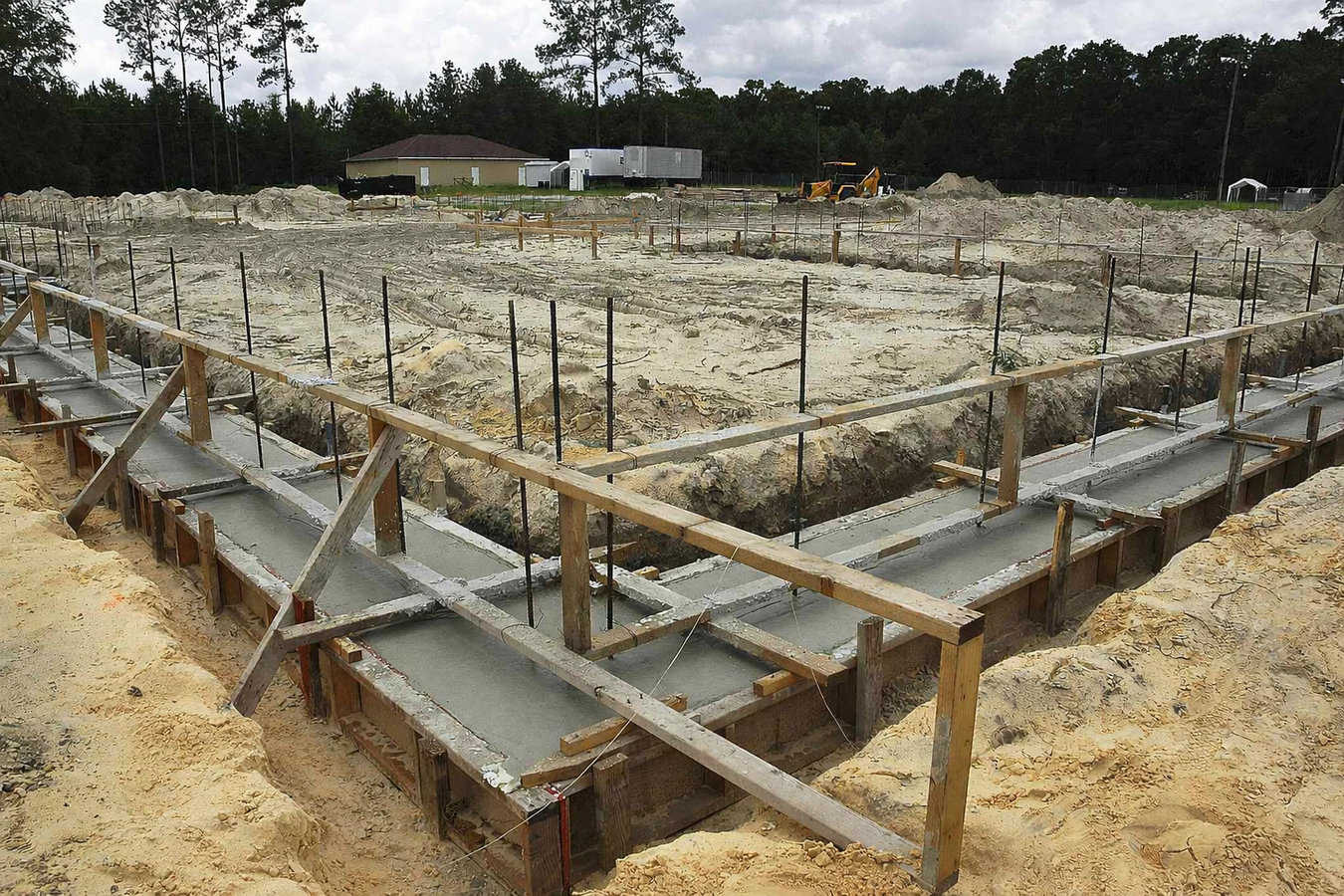
We handle every part of the footing process - site assessment, Pinal County permit application and inspection coordination, trench excavation, form setting, rebar placement and tying, the concrete pour managed for desert heat, and the curing period. In San Tan Valley's clay-heavy soils, we follow sizing and depth guidelines that account for local ground movement - meaning your footing may be deeper or wider than you would see specified for a project in a more stable-soil area, and that is the right call. We work on patio covers, pergolas, block walls, room additions, carports, and detached outbuildings. When your project also needs foundation raising because an existing structure has settled, we assess what is needed before recommending the path forward.
For new builds that need a complete concrete foundation rather than individual footings, we also provide foundation installation services. Every footing project starts with a site visit - not a phone estimate - because soil conditions, structure size, and site access all affect what the job actually requires. The Pinal County Development Services department handles permits for this area, and we work with their process regularly.
Suited for homeowners adding shaded outdoor structures that need a stable anchor to stay level over years of desert heat and monsoon cycles.
Suited for new CMU block wall construction where the footing must be sized to handle lateral soil pressure and expansive clay movement.
Suited for permitted additions and detached garages or casitas where the footing must meet Pinal County building code requirements.
Suited for existing structures showing signs of footing movement, cracking, or inadequate sizing that need professional evaluation before more damage occurs.
San Tan Valley sits in Pinal County on soil that contains a significant amount of clay - soil that swells when it absorbs water and contracts as it dries out. Every monsoon season, that cycle repeats, and anything anchored in the ground is along for the ride. A footing that is too shallow, too narrow, or skimped on rebar will start to show the effects of that movement within a few years - posts that lean, walls that crack at the corners, gaps opening up between structures. Getting the footing right from the start is far cheaper than diagnosing and repairing the damage later. Summer heat adds a separate challenge: temperatures in San Tan Valley regularly exceed 110 degrees Fahrenheit, and concrete poured in that heat without proper management can dry out too fast before it reaches its full strength. We schedule pours for early morning during summer months, use cooled water in the mix, and cover fresh concrete to slow evaporation during the critical first days.
San Tan Valley is also unincorporated Pinal County - not a city - which means permits and inspections run through Pinal County Development Services rather than a city building department. That distinction matters because the permit timelines, inspector availability, and documentation requirements are different from what you would encounter in nearby cities. We work in this jurisdiction regularly, which means your project does not get slowed down by a contractor learning the process on your dime. Homeowners in Queen Creek and Chandler face similar soil conditions and rely on the same careful approach.
We visit your property before giving you a price - soil conditions, site access, and what you are building all affect the scope. You will receive a written estimate after the visit, not a rough number over the phone. We respond to all inquiries within one business day.
We submit the permit application to Pinal County Development Services before any digging begins. Plan for one to several weeks depending on project type and current county workload. We handle the application and keep you updated - you do not need to manage any of the paperwork.
Once the permit is approved, the crew digs the trench or holes, sets the forms, and places steel rebar inside before any concrete is poured. In summer, this work starts early in the morning to beat the worst of the heat. Most residential projects are ready to pour the same day.
Concrete is poured and the surface is smoothed. Depending on your permit, a county inspector may check the footing before or after the pour - we coordinate that. After at least one week of curing time, you will receive permit closeout documentation confirming the work was done correctly. Keep that paperwork.
We come to your site before we quote anything - because every lot in San Tan Valley is different.
(480) 919-2240San Tan Valley falls under Pinal County jurisdiction - not a city - and the permit timeline, inspection requirements, and documentation process here are different from Maricopa County. We pull Pinal County permits regularly, which means your project does not get delayed by a contractor figuring out the process for the first time.
San Tan Valley's expansive clay soil moves with every monsoon season. We design footing depth and rebar placement based on what the soil here actually does - not a standard spec sheet from a different climate. A footing sized right for this area will outlast structures built on one that was not.
Concrete poured in 110-degree heat without active management can develop surface cracks before it even finishes hardening. Our crews schedule summer pours for early morning and use proven hot-weather curing methods. The result is a footing that reaches its full design strength - not one that looks solid but is weaker underneath.
When the project is done, you receive permit closeout paperwork confirming the work was inspected and approved by Pinal County. That documentation protects your property value and can prevent headaches when buyers or lenders ask for proof of permitted work - a real consideration given how much San Tan Valley home values have climbed.
San Tan Valley has grown fast, and that growth has brought a mix of experienced and less-experienced contractors into the market. Spending two minutes verifying your contractor is licensed through the Arizona Registrar of Contractors before signing anything is one of the most useful things you can do. The American Concrete Institute also publishes guidance on hot-weather concreting practices that matter directly in this climate. We are licensed, permitted, and stand behind our work after the crew leaves.
When an existing foundation or structure has settled unevenly, foundation raising corrects the problem before it causes more damage to the structure above.
Learn moreFor new homes and larger structures that need a complete slab foundation rather than individual footings, foundation installation covers the full scope from soil prep to inspection sign-off.
Learn moreSummer books fast and monsoon season complicates scheduling - reach out now so your project is not waiting on a contractor slot.