Loading...
Serving San Tan Valley, AZ and surrounding areas. (480) 919-2240
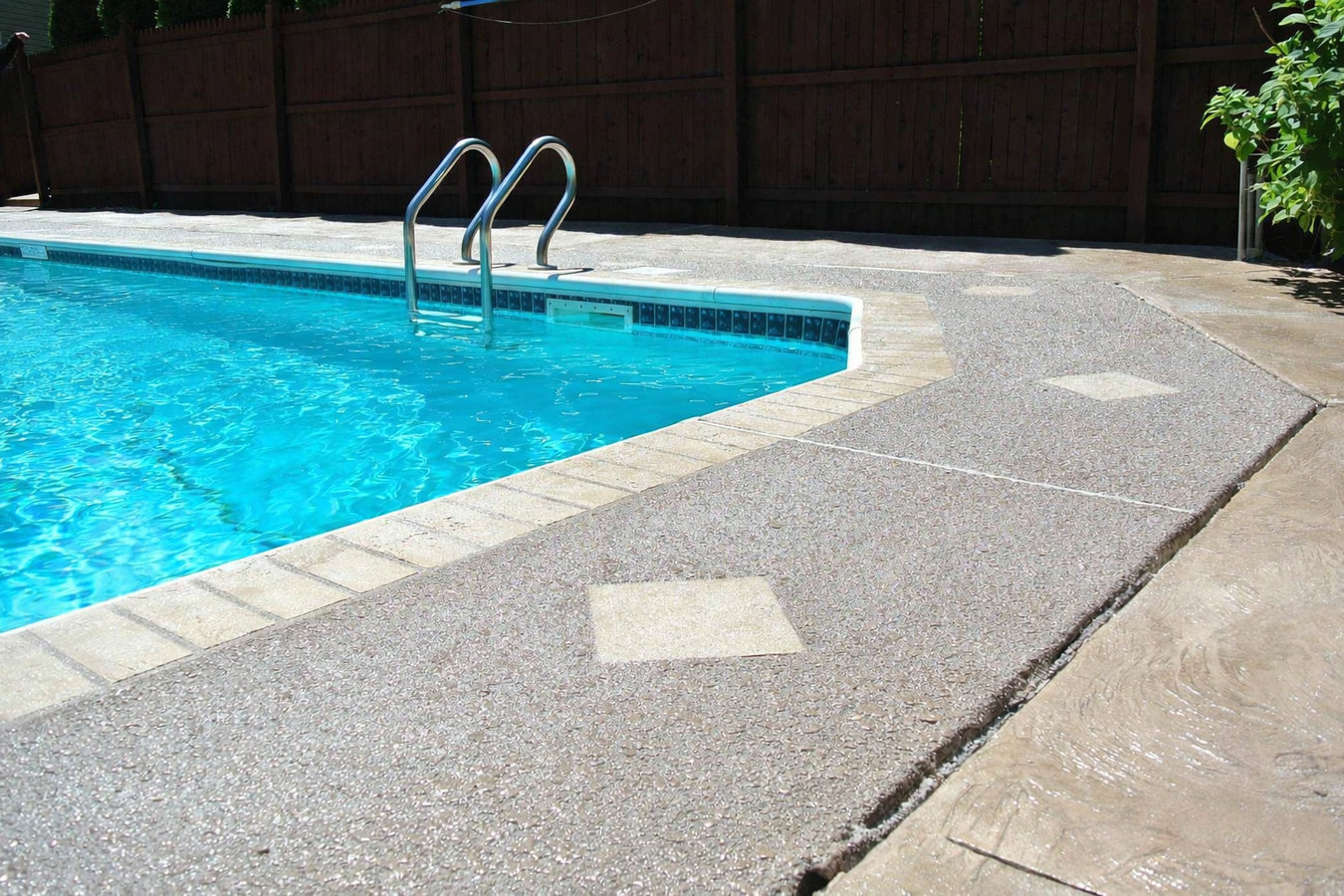
Your pool deck should be comfortable barefoot in July, not a burn hazard. We pour and resurface concrete pool decks with finishes suited to Arizona's triple-digit summers.
Concrete pool decks in San Tan Valley involve pouring or resurfacing the hard surface surrounding your pool - most projects run two to four days of active work plus a curing period before you can use the area normally.
In this heat, the finish you choose matters as much as the concrete itself. Standard gray concrete can reach temperatures that burn bare feet on a July afternoon. That is why we discuss finish options - texture, color, and slip resistance - before a single form goes in. Homeowners who also want to upgrade the surrounding area often pair a pool deck with concrete patio construction for a unified look from the back door to the water.
Whether you are replacing a worn deck that has been baking in the Sonoran Desert for 15 years or building one for the first time, we handle the permit process through Pinal County and flag any HOA guidelines before work starts.
Cracks wider than a quarter inch, or cracks that seem to grow each season, signal the underlying soil is moving - a common issue in San Tan Valley's clay-heavy ground. Left alone, they collect water during monsoon rains and speed up the damage.
If your deck is painful to stand on by mid-morning in summer, the finish has either worn away or was never suited to this climate. San Tan Valley's intense sun means a dark or smooth surface can reach burn-level temperatures. Resurfacing with a cooler finish is a straightforward fix.
If one section of the deck sits noticeably lower than the rest, or water collects in a low spot after rain, the soil beneath has shifted. This is both a tripping hazard and a drainage problem - and in San Tan Valley, it is often caused by clay soil expanding and contracting over several monsoon cycles.
A pool deck that feels slick when wet is a safety hazard. Concrete loses its texture over time as foot traffic and pool chemicals wear it down. If your family has felt uncertain footing around the pool, a resurfacing with a textured finish restores safe traction.
We handle both full replacements and resurfacing overlays. A full replacement is the right call when the existing slab is cracked deeply, heaving, or crumbling. Resurfacing costs less upfront and works well when the concrete underneath is structurally sound but the surface looks worn or is too hot to walk on. We will tell you honestly which option fits your situation - not the one with the higher ticket price. Clients who want a decorative look often ask about concrete steps construction at the same time to tie the whole poolside area together visually.
Finish options include a simple broom texture, a stamped pattern that mimics stone or tile, and spray-applied coatings in a range of colors. Every job includes proper control joint placement and a post-cure sealer application to protect against pool chemicals and UV breakdown - two steps that are easy to skip and expensive to make up for later.
Best for decks with deep cracks, sinking sections, or concrete that is crumbling at the edges.
Suited to homeowners whose deck is structurally sound but looks worn or runs too hot in summer.
For homeowners who want the look of stone or tile without the cost of natural materials.
Specifically suited to San Tan Valley's high-UV climate - lighter, textured coatings that stay noticeably cooler underfoot.
San Tan Valley regularly sees summer temperatures above 110 degrees, and concrete poured in that heat can dry too fast at the surface before it has fully hardened underneath - a problem called flash curing that leads to cracking and a weaker finished product. Experienced local contractors schedule pours for early morning, use additives that slow the drying process, and keep the fresh concrete moist longer than they would in a cooler climate. The North American Monsoon brings an additional challenge: storms between July and September can drop heavy rain on fresh concrete and ruin a surface finish, so timing the pour correctly is not just a preference - it is part of delivering a good result. You can learn more about monsoon weather patterns from the National Weather Service.
The soil in much of the East Valley - including parts of Queen Creek and Gilbert where we also work - contains a significant amount of clay that swells when wet and shrinks when dry. A contractor who does not account for this during base prep and joint placement leaves you with a deck that cracks and shifts within a few years. San Tan Valley also has a large number of planned communities with active HOAs, and finish choices for pool decks often require prior approval. We check those guidelines before any work begins.
We ask a few basic questions - deck size, whether you want a replacement or resurfacing, and any visible problems. You'll hear back within 1 business day to schedule a free on-site visit.
We walk the full deck area, check drainage, take measurements, and discuss finish options. This is where we flag any HOA restrictions or Pinal County permit requirements - no surprises after the fact.
If the project requires a county permit, we handle the application. Once approved and a start date is set, the crew handles demolition and base prep - the most important part of a long-lasting result.
The pour happens early morning to avoid flash curing in the heat. After your chosen finish is applied and joints are cut, we seal the surface and do a final walkthrough with you before we leave.
No obligation, no pressure - just a written quote from a licensed San Tan Valley contractor who handles permits and HOA approvals for you.
(480) 919-2240We know which coatings and textures stay coolest underfoot when summer temperatures top 110 degrees. That is not a generic claim - it is what separates a usable backyard from one you avoid until sundown.
We pull permits through Pinal County Development Services on your behalf, so the project is documented and inspected. That paperwork matters when you sell your home - unpermitted work can kill a deal. Verify any contractor's license at the Arizona Registrar of Contractors.
San Tan Valley sits on soil that expands and contracts every monsoon cycle. We compact the base and place control joints at the right intervals - the two steps that most directly determine whether a deck lasts 10 years or 30.
Many San Tan Valley communities require HOA sign-off on finish colors and materials before a project starts. We flag those requirements early so your project moves forward without delays or do-overs.
Every pool deck we build is backed by the same approach: proper base prep, the right finish for this climate, and full permit documentation. That combination is what makes the difference between a deck that holds up and one that needs work again in a few years.
Add or replace the concrete steps leading to your pool area, patio, or entryway for a finished, cohesive look.
Learn moreExtend your outdoor living space with a poured concrete patio that connects to your pool deck for a unified design.
Learn moreFall booking slots fill fast in San Tan Valley - reach out now and get your project on the calendar before the next season.